
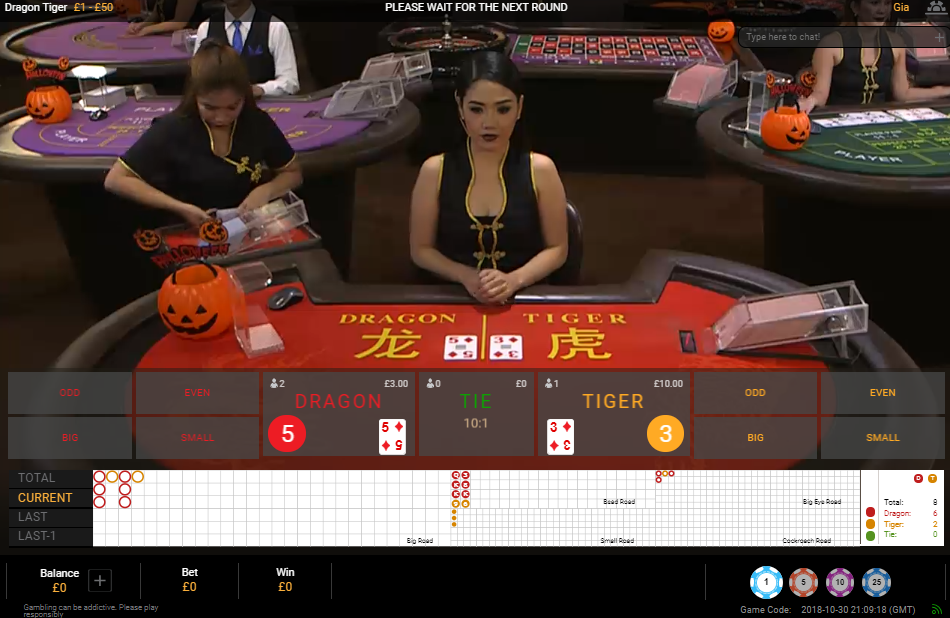
Dragon Tiger is frequently marketed as a game of pure, unalterable luck. Because the live dealer simply distributes one card to the Dragon and one to the Tiger, casual players assume there is no room for structural strategy. They sit down, place emotional wagers, and watch their bankrolls slowly erode under the weight of the casino’s mathematical advantage.
However, experienced risk managers view the live felt differently. While you cannot completely erase the casino’s built-in margin, you can actively manipulate which mathematical parameters you subject your bankroll to. Knowing how to minimize the Dragon Tiger house edge is the fundamental dividing line between a recreational punter who drains their wallet and an analytical operator who preserves capital over long-term sessions.
In this guide, we will dissect the cold, hard mathematics of Dragon Tiger betting options, expose the structural traps designed to siphon your chips, and layout a professional execution framework to keep the house edge as close to its absolute baseline as possible.
The Mathematical Breakdown of the Board
To shrink the house edge, you must first know where it hides. The house edge represents the statistical advantage the online casino holds over you on any given wager. In a standard 8-deck Dragon Tiger game, the mathematical profile shifts drastically depending on where you place your chips:
| Betting Option | Standard Payout | Statistical House Edge | Mathematical Assessment |
| Dragon / Tiger Main Bets | 1:1 (Even Money) | 3.73% | The Baseline: The only viable zone for long-term play. |
| Big / Small (Side Bets) | 1:1 | 7.69% | High Friction: Doubled house edge due to the “Deadly 7” trap. |
| Odd / Even (Side Bets) | 1:1 | 7.69% | High Friction: Doubled house edge due to the “Deadly 7” trap. |
| Suit Bets (Hearts/Clubs etc.) | 3:1 | 7.69% | High Friction: Requires strict card counting to justify. |
| Tie Bet | 8:1 | 32.77% | Toxic Zone: One of the worst structural bets in the entire casino. |
| Suited Tie | 50:1 (Up to 11:1) | 13.98% | High Variance: A speculative longshot designed to drain equity. |
3 Core Tactics to Keep the House Edge at Its Minimum
To achieve the highest possible Return to Player (RTP) during your live casino sessions in the Philippines, you must strictly implement the following mathematical parameters:
1. Enforce a Strict Blacklist on the Tie Wager
The single most effective action you can take to minimize your overall session house edge is to completely ignore the Tie button. At an astronomical 32.77% house edge, the Tie bet is mathematically toxic. To put this in perspective, for every ₱1,000 wagered on the Tie over time, the casino statistically keeps ₱327.70. By shifting that same volume strictly to the main Dragon or Tiger spots, the house’s theoretical take drops to just ₱37.30.
2. Isolate the “Tie Commission” Impact
Why does the main Dragon/Tiger bet have a 3.73% edge if the probability of either side winning is seemingly equal? It is because of the Tie Commission Rule. If a round ends in a tie, the casino does not return your full stake; they seize 50% of your wager.
To minimize the impact of this rule, look for premium live dealer lobbies (such as specific variations by top-tier providers) that offer a side feature or a specific promotion that rebate a portion of tie commissions, though sticking strictly to flat betting on the main options remains your core defense.
3. Reject Side Bets Outside of Card-Counting Thresholds
The Big/Small and Odd/Even side bets look alluring because they offer even-money payouts. However, the software rules dictate that if a 7 is dealt, all side wagers lose automatically. Because there are exactly 32 seven-cards in an 8-deck shoe, this specific rule artificially inflates the side bet house edge to 7.69%—more than double the edge of the main bets. Unless you are actively tracking a depleted shoe where a vast majority of 7s have already passed, these options should be strictly avoided.
The Strategic Bankroll and Table Execution Framework
Minimizing the house edge requires seamless structural execution at the table. To prevent emotional bias from overriding your mathematical discipline, follow this strict operational sequence:
Risk Mitigation Sequence
The Illusion of “AI Edge-Reduction Software”
Because players are eager to find ways to defeat the house edge, social media platforms are packed with advertisements for mobile apps claiming to crack the Dragon Tiger algorithm.
Expert Compliance Note: There is absolutely no software program that can alter or bypass the physical house edge of a live-streamed casino game. Licensed platforms use heavily secure, audited, cryptographic random parameters and physical card shoes that are shuffled in plain sight of high-definition cameras. Any downloadable tool promising an automated edge advantage is a phishing scam designed to steal your casino login details or insert malicious code into your mobile device. Trust the math on the felt, never an external download.
Minimizing the house edge in Dragon Tiger is not about finding a magic trick to predict the next card; it is about absolute mathematical containment. By confining your activity entirely to the main Dragon and Tiger bets, completely blacklisting the Tie box, avoiding uncalculated side options, and strictly monitoring your session times, you reduce the casino’s operating advantage to its absolute minimum. Play smart, stay methodical, and manage your bankroll with clinical discipline.